
Muskrat research
Researchers Find Muskrats Help Control Invasive Plants in Wetlands
A humble, semiaquatic rodent could help natural resource managers restore resilient, biodiverse wetland habitats.
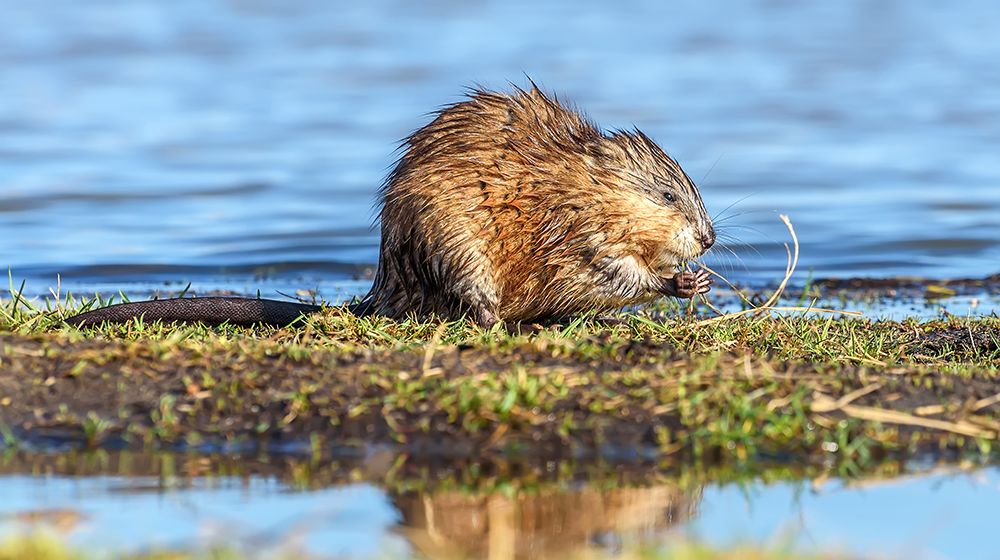
Muskrats are semiaquatic rodents that play significant roles in shaping wetland ecosystems.
Shane Lishawa is a senior research associate with Loyola University Chicago’s School of Environmental Sustainability. Along with SES faculty member Brian Ohsowski, PhD, Lishawa leads Team Typha, a research group working to restore biodiversity in Great Lakes coastal wetlands. The group focuses on mitigating the impacts of Typha × glauca (Typha), a hybrid cattail that forms dense stands and outcompetes native species.
Lishawa recently published work with long-time collaborators from the University of Connecticut and Sault Ste. Marie Tribe of Chippewa Indians testing how muskrat activity affects wetlands dominated by Typha and another invasive plant, European frogbit. Muskrats play a central role in the creation story of the Anishinaabe people, and they continue to hold cultural significance for the Sault Tribe.
“This study was inspired by field observations of the effects of muskrats on wetland vegetation and by our Tribal partner’s interest in better understanding muskrat ecology for the betterment of Great Lakes ecosystems,” said Lishawa.
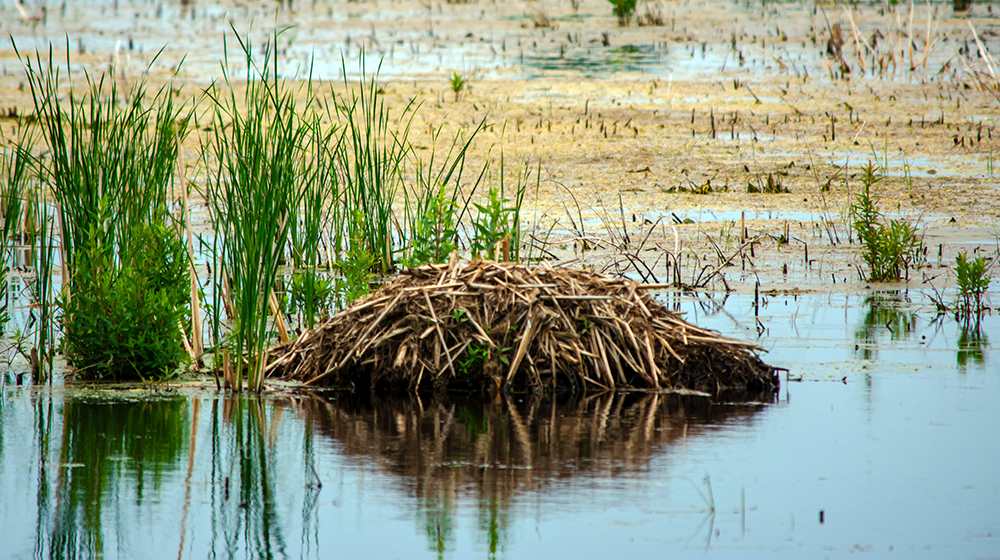
Muskrats use plant materials, including invasive cattails, to build lodges in shallow water.
Team Typha is testing management methods that involve mowing the cattails below the waterline and removing cut plant material. They have found the approach can be effective in restoring biodiversity to Typha-invaded habitats. The muskrat research showed that the rodents have a similar impact.
Muskrats eat Typha and use the plants to build their lodges. They cut the cattails underwater, drowning the plants by removing stems that function like snorkels, providing oxygen from the atmosphere to their roots and rhizomes. With less Typha and more open water, conditions become less suitable for European frogbit and more hospitable to native plants. The rodents’ impact can be dramatic. The research team found that muskrats reduced Typha cover by 71 percent and cut frogbit cover by 88 percent compared to unmanipulated controls.
In short, muskrats act as ecosystem engineers, substantially altering wetland environments. In Typha-dominated wetlands, they produced some of the same ecological benefits as Team Typha’s management strategies, reducing invasive plant density and enhancing habitat complexity. The research team concluded that management activities aimed at increasing muskrat populations could contribute to ongoing efforts to restore wetlands in the Great Lakes region.
Shane Lishawa is a senior research associate with Loyola University Chicago’s School of Environmental Sustainability. Along with SES faculty member Brian Ohsowski, PhD, Lishawa leads Team Typha, a research group working to restore biodiversity in Great Lakes coastal wetlands. The group focuses on mitigating the impacts of Typha × glauca (Typha), a hybrid cattail that forms dense stands and outcompetes native species.
Lishawa recently published work with long-time collaborators from the University of Connecticut and Sault Ste. Marie Tribe of Chippewa Indians testing how muskrat activity affects wetlands dominated by Typha and another invasive plant, European frogbit. Muskrats play a central role in the creation story of the Anishinaabe people, and they continue to hold cultural significance for the Sault Tribe.
“This study was inspired by field observations of the effects of muskrats on wetland vegetation and by our Tribal partner’s interest in better understanding muskrat ecology for the betterment of Great Lakes ecosystems,” said Lishawa.
Team Typha is testing management methods that involve mowing the cattails below the waterline and removing cut plant material. They have found the approach can be effective in restoring biodiversity to Typha-invaded habitats. The muskrat research showed that the rodents have a similar impact.
Muskrats eat Typha and use the plants to build their lodges. They cut the cattails underwater, drowning the plants by removing stems that function like snorkels, providing oxygen from the atmosphere to their roots and rhizomes. With less Typha and more open water, conditions become less suitable for European frogbit and more hospitable to native plants. The rodents’ impact can be dramatic. The research team found that muskrats reduced Typha cover by 71 percent and cut frogbit cover by 88 percent compared to unmanipulated controls.
In short, muskrats act as ecosystem engineers, substantially altering wetland environments. In Typha-dominated wetlands, they produced some of the same ecological benefits as Team Typha’s management strategies, reducing invasive plant density and enhancing habitat complexity. The research team concluded that management activities aimed at increasing muskrat populations could contribute to ongoing efforts to restore wetlands in the Great Lakes region.